

Nestled on the northern coast of the Turkish Republic of Northern Cyprus, framed by the emerald expanse of the Beşparmak Mountains and kissed by the sapphire waters of the Mediterranean, lies Kyrenia (Girne). Often hailed as the “Jewel of North Cyprus” or the “Pearl of the Mediterranean,” this captivating town is a vibrant mosaic of ancient history, breathtaking natural beauty, and a thriving modern lifestyle. More than just a picturesque postcard, Girne offers a multifaceted experience that draws in history buffs, sun-seekers, expatriates, and adventurers alike, promising an unforgettable journey through its timeless charm.
A Tapestry of History: Girne Through the Ages
The story of Girne is a testament to the ebb and flow of civilizations, each leaving an indelible mark on its landscape and character. Its strategic coastal position, blessed with a natural harbour, made it a coveted prize for countless empires, transforming it into the rich historical tapestry it is today.
Ancient Echoes and Early Civilizations: The earliest signs of human habitation in the Girne area stretch back to the Neolithic period, around 5800-3000 BC. Later, Mycenaean Greeks are believed to have founded the city, possibly establishing a trading post or settlement. The area became known as Keryneia, a name that echoes in its modern Greek designation, Kyrenia. Under Roman rule, it flourished as a port, facilitating trade and maritime activities.
Byzantine Fortifications and Lusignan Grandeur: As the Roman Empire waned and the Byzantine era dawned, the need for coastal defenses became paramount. The Byzantines initiated the construction of a fortress on the site of the present-day Kyrenia Castle, strategically positioned to guard the harbour from Arab raids. However, it was under the rule of the French Lusignan dynasty (1192-1489), who established the Kingdom of Cyprus, that Girne truly entered its golden age. The Lusignans transformed the Byzantine fort into a formidable Crusader castle, expanding its walls, adding grand halls, and incorporating the characteristic Gothic architectural elements that define much of its current structure. Girne became a crucial Lusignan stronghold and a vital trading port, its harbour bustling with ships laden with goods from across the Mediterranean.
Venetian Might and Ottoman Shift: The Lusignan reign eventually gave way to the Venetians (1489-1571), who recognized the castle’s strategic importance and further strengthened its fortifications. They adapted its design to withstand cannon fire, adding massive circular bastions and improving its defenses, turning it into one of the most impenetrable fortresses of its time. However, even these formidable defenses could not withstand the might of the advancing Ottoman Empire. In 1570, after a relatively short siege, Girne fell to the Ottomans, marking a significant shift in the island’s cultural and political landscape. Under Ottoman rule, Girne became a naval base and administrative center. The Christian churches were converted into mosques, and the town’s population gradually shifted. While no longer the bustling Lusignan trade hub, it maintained its local importance.
The Ottoman Conquest of Cyprus (1570–1571)
The Ottoman conquest of Cyprus was part of Sultan Selim II’s broader ambitions in the eastern Mediterranean. With Venice controlling Cyprus since 1489, the Ottomans viewed the island as a threat to their shipping lanes and trade routes.
In 1570, a large Ottoman fleet invaded the island under the command of Lala Mustafa Pasha. The campaign was brutal but swift. Nicosia fell after a 45-day siege, and Famagusta held out until 1571 before succumbing after a long and bitter resistance.
Kyrenia, like several smaller coastal towns, surrendered without much resistance. Once the Ottomans secured control of the island, they quickly began restructuring its administration, society, and religious institutions to reflect Ottoman Islamic governance and demographic priorities.
The Transformation of Kyrenia Under Ottoman Rule
Islamization and Religious Architecture
One of the most immediate and visible changes under the Ottomans was the Islamization of urban spaces. In Kyrenia, as elsewhere in Cyprus, many churches were either converted into mosques or left for the use of the remaining Christian population, depending on the town’s size and population balance.
In Kyrenia, the most prominent transformation was the conversion of the Church of St. George into the Ağa Cafer Paşa Mosque, named after a local Ottoman governor. While the mosque itself is modest, its significance lies in the symbolic transition of Kyrenia from a Christian-controlled town to one governed under Islamic law and values.
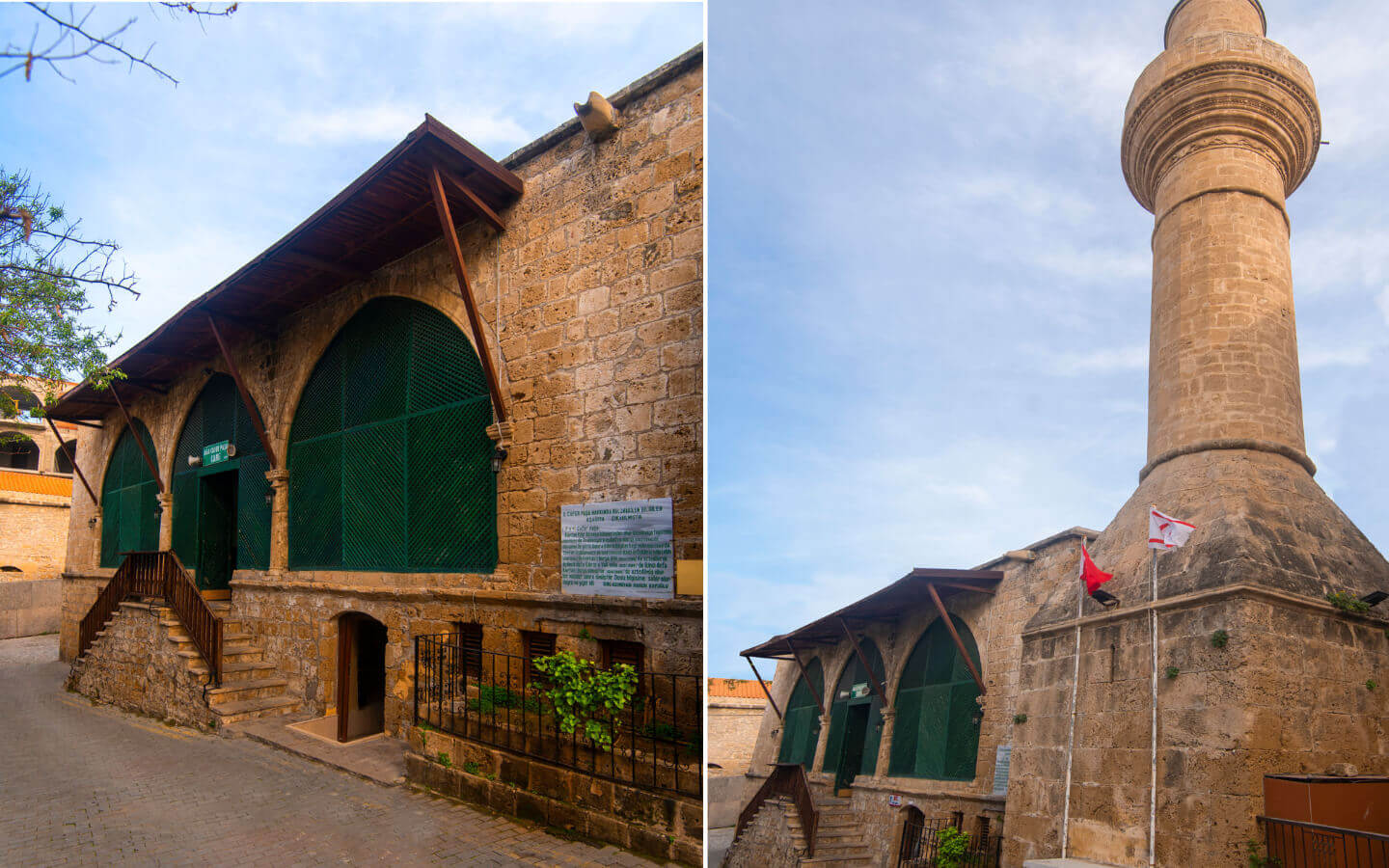
Over time, other mosques were established, such as the Mustafa Paşa Mosque, reflecting the growth of the Turkish Muslim population. These mosques not only served religious functions but also acted as centers for education and social gathering, often connected to medreses (Islamic schools) and külliyes (complexes with soup kitchens, libraries, and baths).
Demographic and Social Changes
One of the key features of Ottoman administration in newly conquered territories was the encouragement of Turkish settlement. After the conquest of Cyprus, the Ottomans undertook a policy of colonization (iskân), sending settlers from Anatolia to bolster the Muslim population on the island.
In Kyrenia, Turkish settlers were granted land and property — often those previously owned by Venetian or Lusignan elites. These settlers brought with them not only a new language and religion but also new customs, culinary traditions, and social structures.
The Turkish Cypriot community in Kyrenia began to form its distinct identity, blending Anatolian Turkish roots with Cypriot influences. The result was a unique Turkish-Cypriot culture that persists in the region today.
Architecture and Urban Planning
The Ottomans made relatively few monumental architectural changes in Kyrenia compared to cities like Nicosia or Famagusta, but their influence is evident in the fabric of the town. Traditional Ottoman houses, with their timber-framed upper stories, ornate wooden balconies, and internal courtyards, began to appear across Kyrenia.
The town’s layout also reflected Ottoman planning ideals — narrow winding streets, central marketplaces (bazaars), hans (caravanserais), and public baths (hamams). While not as large or bustling as the capital, Kyrenia developed a modest but well-integrated urban economy centered on trade, fishing, and small-scale agriculture.
The Kyrenia harbor continued to serve as a vital link for trade with Anatolia and the Levant. Goods such as olive oil, citrus fruits, wine (used medicinally), and carob were exported, while textiles, ceramics, and tools were imported.

Legal and Administrative Structures
The Ottoman legal and administrative system — the Millet System — allowed considerable autonomy to religious communities while retaining central oversight. In Kyrenia, as in other parts of Cyprus, the qadi (Islamic judge) played a central role in local governance, settling disputes and recording transactions.
Christian Greeks, Armenians, Maronites, and Jews were permitted to practice their religions and run their own communal affairs under their respective religious leaders. However, they paid the jizya (a tax for non-Muslims), which, alongside agricultural levies, formed a vital part of the Ottoman fiscal system.
Land was organized under the timar system, where plots were granted to Ottoman soldiers or officials in exchange for military service. Over time, some of these lands were transformed into vakıf (pious endowments), especially in and around Kyrenia, contributing to the maintenance of mosques and schools.
British Colonial Influence and Modern Resurgence: The arrival of the British in 1878 brought a new era of development and transformation. The British invested in infrastructure, improving roads and the harbour, which facilitated trade and travel. Girne began to emerge as a charming resort town, attracting British colonial officers and later, tourists, drawn by its idyllic setting and pleasant climate. Following the turbulent events of 1974, when the island was divided, Kyrenia came under Turkish Cypriot administration and was officially renamed Girne. Since then, it has experienced a remarkable resurgence, flourishing as the primary tourism and education hub of North Cyprus, attracting a diverse population and investing heavily in its infrastructure and amenities.
The Iconic Kyrenia Harbour & Castle
The soul of Girne undeniably resides in its magnificent horseshoe-shaped harbour and the formidable Kyrenia Castlethat stands sentinel over it.
The harbour is a living postcard, a vibrant tableau of colorful fishing boats bobbing gently alongside sleek yachts, all framed by the historic arc of Ottoman-era warehouses now transformed into charming restaurants and cafes. Day or night, the harbour buzzes with activity: fishermen mending nets, tourists strolling along the promenade, and the lively chatter of diners enjoying fresh seafood with the gentle lapping of waves as a soundtrack. It’s a place where history feels tangible, where every stone seems to whisper tales of ancient mariners, crusaders, and merchants. Sunset at the harbour, with the sky ablaze in hues of orange and purple reflecting on the water, is a truly mesmerizing experience.
Dominating the eastern flank of the harbour is the imposing Kyrenia Castle. This architectural marvel is a testament to centuries of defensive engineering and artistic influence. Its massive walls, formidable towers, and deep moats speak volumes of its strategic importance throughout history. Inside, visitors can explore a labyrinth of chambers, corridors, and even what are believed to be Lusignan prison cells. The castle offers breathtaking panoramic views of the harbour, the town, and the distant mountains from its ramparts.

However, the castle’s most prized possession is the Shipwreck Museum, housing the remains of a 4th-century BC Greek merchant ship. Discovered off the coast of Kyrenia in 1965, this remarkably preserved vessel, along with its cargo of amphorae, millstones, and almonds, offers an extraordinary glimpse into ancient maritime trade and technology. The Kyrenia Ship, believed to be the oldest shipwreck ever recovered and conserved, is a national treasure and a highlight of any visit to the castle.
Beyond the Harbour: Exploring Girne Town
While the harbour is the focal point, Girne town offers a wealth of experiences waiting to be discovered just a few steps inland.
The Old Town streets meander away from the harbour, a delightful maze of narrow, winding lanes. Here, you’ll find a blend of traditional Cypriot houses, some lovingly restored, others revealing their age with charming decay. Small, independent shops offer everything from local crafts and souvenirs to intricate jewellery and textiles, providing a more authentic shopping experience away from the modern boutiques.
Girne’s culinary scene is diverse and enticing. From quaint tavernas serving traditional Cypriot mezes and fresh fish to upscale restaurants offering international cuisine, there’s something to satisfy every palate. Harbour-side dining provides unbeatable ambiance, but venturing into the side streets can uncover hidden gems known for their authentic flavours and local hospitality.
As dusk falls, Girne’s nightlife comes alive. While not a party hub, it offers a good selection of bars and pubs where visitors can enjoy a relaxed drink. North Cyprus is also known for its casinos, and Girne boasts several large, opulent establishments that attract a regional clientele, offering entertainment and a different kind of buzz.
The town also features several significant mosques, notably the Ağa Cafer Pasha Mosque, a striking example of Ottoman architecture that adds to the town’s diverse historical fabric. Local markets, especially the municipal market, are excellent places to experience daily life, pick up fresh produce, local cheeses, and other delicacies.
Surrounding Attractions: The Girne Hinterland
The beauty of Girne extends far beyond its urban core, with a host of captivating attractions nestled in its immediate hinterland and along its picturesque coastline.

Just a short drive into the mountains lies Bellapais Village, a serene retreat famed for its stunning 13th-century Gothic Abbey. Immortalized by Lawrence Durrell, the Abbey offers breathtaking views of Girne and the sea, while the village itself exudes an ethereal charm with its cobbled streets and charming cafes. It’s a perfect half-day trip for history and tranquility lovers.

Towering above the plains are the “three fingers” of the Beşparmak Mountains, each crowned with a magnificent castle. The most accessible and arguably the most picturesque is St. Hilarion Castle. Often described as a fairy-tale castle due to its whimsical turrets and dramatic perch, it offers truly panoramic views that stretch from the mountains to the entire northern coastline. Its Byzantine origins and Lusignan additions tell a compelling story of medieval power. Further east and more challenging to access are Buffavento Castle, a truly remote and rugged fortress with incredible views, and Kantara Castle, offering different perspectives of the island’s strategic history.
For nature enthusiasts, Alagadi Turtle Beach, located east of Girne, is a crucial conservation site. This beautiful sandy stretch is one of the most important nesting grounds for endangered Loggerhead (Caretta Caretta) and Green (Chelonia Mydas) sea turtles in the Mediterranean. During the nesting and hatching season (roughly May to September), visitors can participate in organized tours to witness the incredible sight of baby turtles making their dash for the sea, contributing to conservation efforts.
The coastal villages extending west and east from Girne, such as Lapta and Esentepe, offer their own distinct appeal. Lapta, with its ancient history and beautiful coastline, is popular for its traditional charm and natural springs. Esentepe, further east, has become a hub for golf enthusiasts and those seeking modern coastal living with stunning sea views. To the west, Karaoğlanoğlu holds historical significance, home to the Martyrs’ Memorial and Museum, commemorating the events of 1974.
Life in Girne: A Blend of Cultures and Lifestyles
Girne is not just a tourist destination; it’s a thriving hub where diverse cultures converge, creating a unique social fabric.
A significant expatriate community, predominantly British, has made Girne their home, attracted by the climate, lower cost of living, and relaxed lifestyle. This has fostered a network of social clubs, shops catering to international tastes, and a vibrant intercultural exchange.

The town is also a prominent educational center, hosting the Girne American University (GAU) and the University of Kyrenia. These institutions attract a large international student body, infusing the town with youthful energy, diverse perspectives, and a cosmopolitan atmosphere.
Furthermore, North Cyprus has seen a rise in medical tourism, with Girne leading the way with several modern private hospitals and clinics offering high-quality services at competitive prices.
The cost of living in Girne, while higher than some other parts of North Cyprus, remains generally more affordable than in Western Europe, making it an attractive option for retirement or relocation. The real estate market is diverse, offering everything from charming traditional apartments in the old town to luxurious villas with sea views and modern complexes with shared amenities.
The underlying local culture is Turkish Cypriot, characterized by warm hospitality, a love for good food, and a strong sense of community. Visitors will find themselves welcomed and encouraged to experience local traditions, from sipping strong Turkish coffee at a harbour-side cafe to enjoying a leisurely evening meal at a local meyhane.
Challenges and Future Outlook
Despite its numerous attractions, Girne, like North Cyprus as a whole, faces certain challenges. The unresolved political status of the Turkish Republic of Northern Cyprus means that Ercan Airport (the primary airport for North Cyprus) is not recognized by international aviation authorities, necessitating a flight connection through Türkiye. This can be a hurdle for some international travelers.
Balancing rapid development with sustainable tourism and preserving the town’s historical and natural heritage is an ongoing challenge. Infrastructure needs, such as water supply and waste management, also require careful planning to support the growing population and tourism industry.
However, the future of Girne remains bright. Its inherent beauty, rich history, and the continuous investment in its tourism and education sectors promise continued growth and prosperity. Efforts to promote sustainable tourism and enhance infrastructure are ongoing, aiming to ensure that Girne remains a captivating destination for generations to come.
Conclusion
Kyrenia (Girne) is more than just a town; it is an experience. It is where ancient stones whisper tales of empires past, where the vibrant blue of the Mediterranean meets the lush green of the mountains, and where a warm, welcoming culture embraces all who visit. From its iconic harbour and formidable castle to its charming streets and the breathtaking natural wonders of its surroundings, Girne truly lives up to its reputation as the azure gem of North Cyprus, inviting all to discover its multi-faceted and enduring charm.


Join The Discussion